
Data Management at the Edge
Edge Data Gateway
One central portal to access, preprocess, select, collect, and visualize edge data from distributed edge devices.
The Challenge
Turn Fragmented Edge Signals into Usable Data
Accessing and using data across distributed, heterogeneous edge devices creates key challenges:
1
Edge signals are fragmented
Valuable operational data is scattered across devices, interfaces, and proprietary systems, making it difficult to use for analytics, products, or AI inferencing.
2
New data requirements create integration work
Each new data collection requirement can mean configuring devices, signals, triggers, formats, and delivery paths. Across heterogeneous fleets, this work becomes difficult to reuse and maintain.
3
Complexity grows with the fleet
As devices, signals, and data consumers increase, teams need a consistent way to control what data is collected, from where, and under what conditions.
The Solution
Manage Edge Data in the Edge Data Gateway
aicas Edge Data Gateway (EDG) is the central portal for accessing, preprocessing, selecting, distributing, and visualizing edge data. It brings devices, available signals, collection configuration, and campaign management into one operational environment.
Centralized Instead of Fragmented
Manage devices, available signals, collection configurations, and campaigns using a single interface.
Reusable Instead of One-off
Define data collection requirements once and reuse or adapt them across devices, fleets, and changing data needs.
Selective Instead of Collect Everything
Choose the signals relevant to each use case and collect data through targeted campaigns instead of moving every available device signal.
Business Outcome
Get more Value from Edge Data with less Operational Effort
By connecting software, data, and AI lifecycles across cloud and edge, the Edge Data Gateway (EDG) as part of the aicas EdgeSuite helps technical teams reduce fragmentation and operate distributed systems more efficiently.
Reduce Data Costs
Select and transmit only the data you need to reduce transmission, cloud processing, and storage costs.
Save Time
Set up and reuse data collection campaigns instead of recreating workflows for every new data request.
Improve Operational Performance
Provide relevant edge data for monitoring, analytics, and faster operational decision-making.
Scale Flexibly
Apply consistent data collection workflows across heterogeneous devices and growing fleets.
Prepare Data for AI
Collect and select relevant edge data for AI model training, validation, and continuous improvement.
How EDG Works
From Connected Devices to Usable Edge Data
Turn distributed edge signals into usable data through a structured workflow, from device connection to visualization and downstream use.
🡢
Add and Connect Devices
🡢
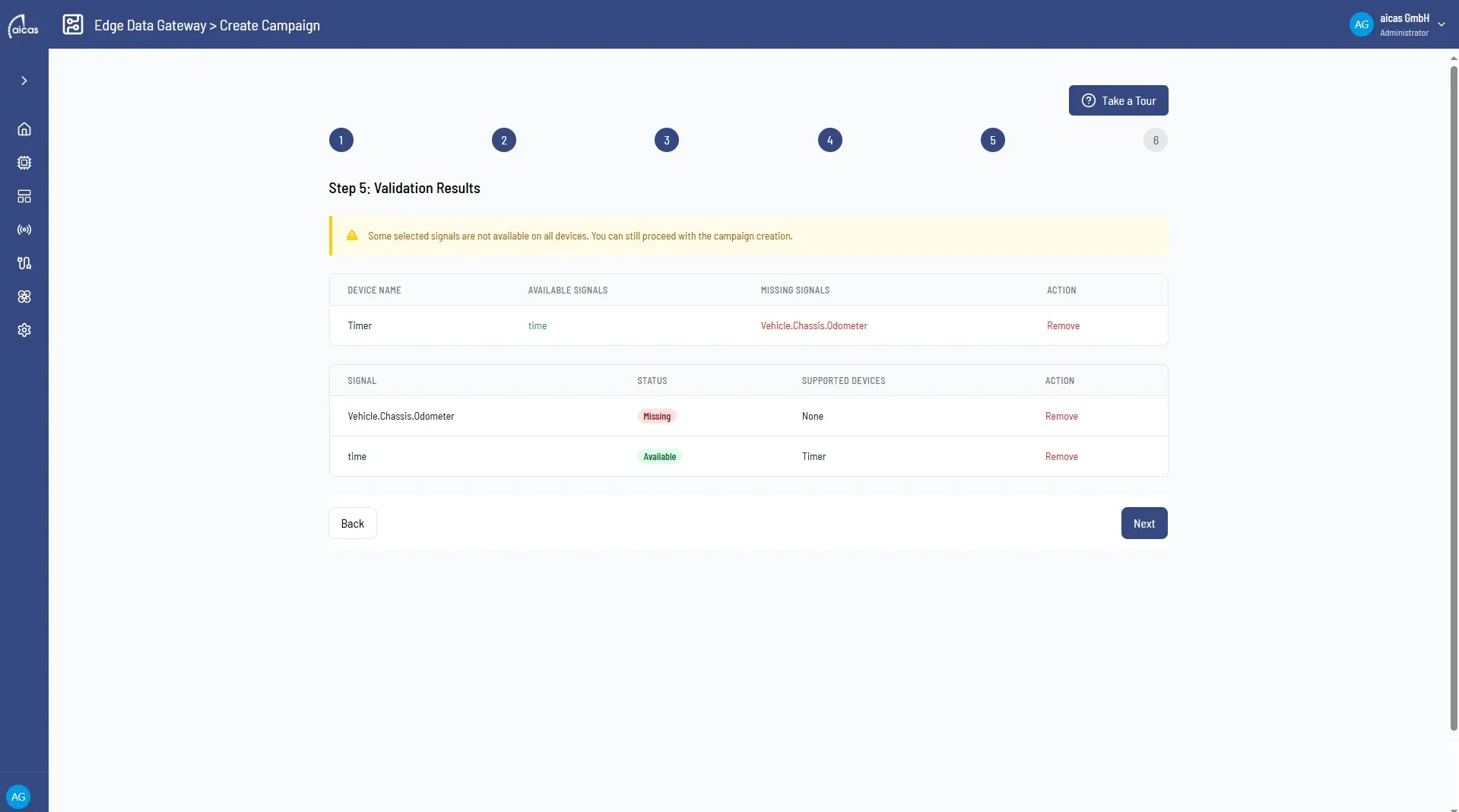
Validate Available Data
🡢
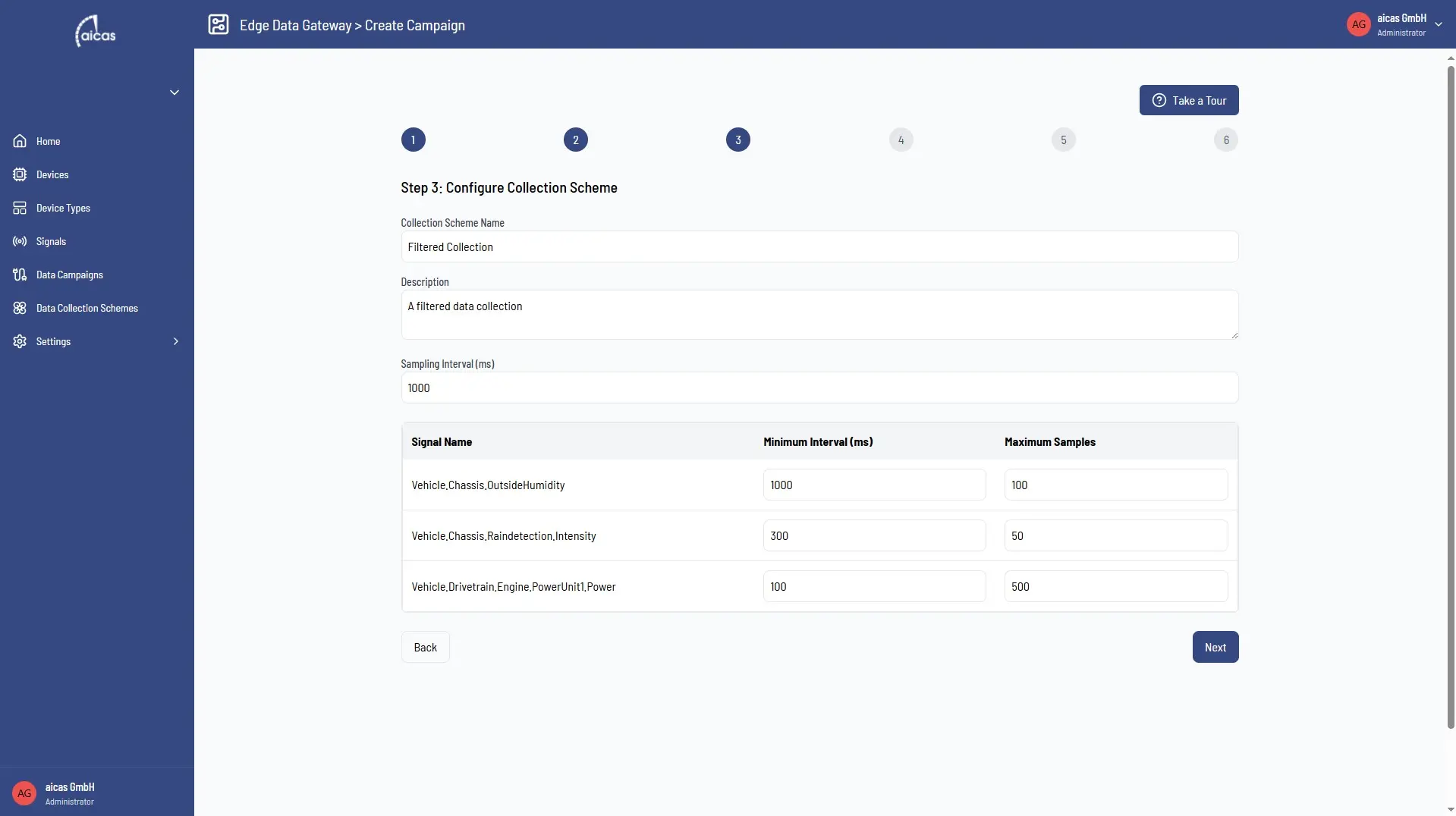
Select the Data Needed
🡢
Configure and Activate Campaigns
🡢
Collect the Data
🡢
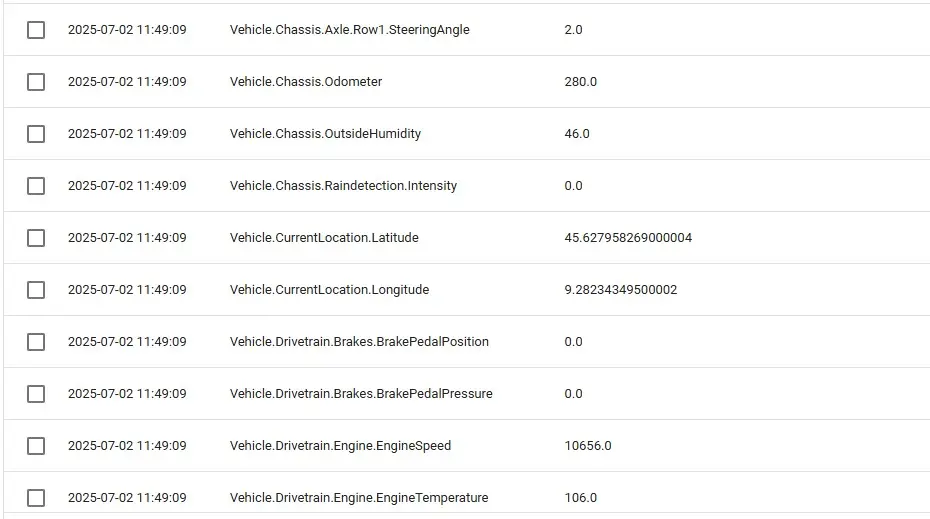
Visualize or Integrate the Results
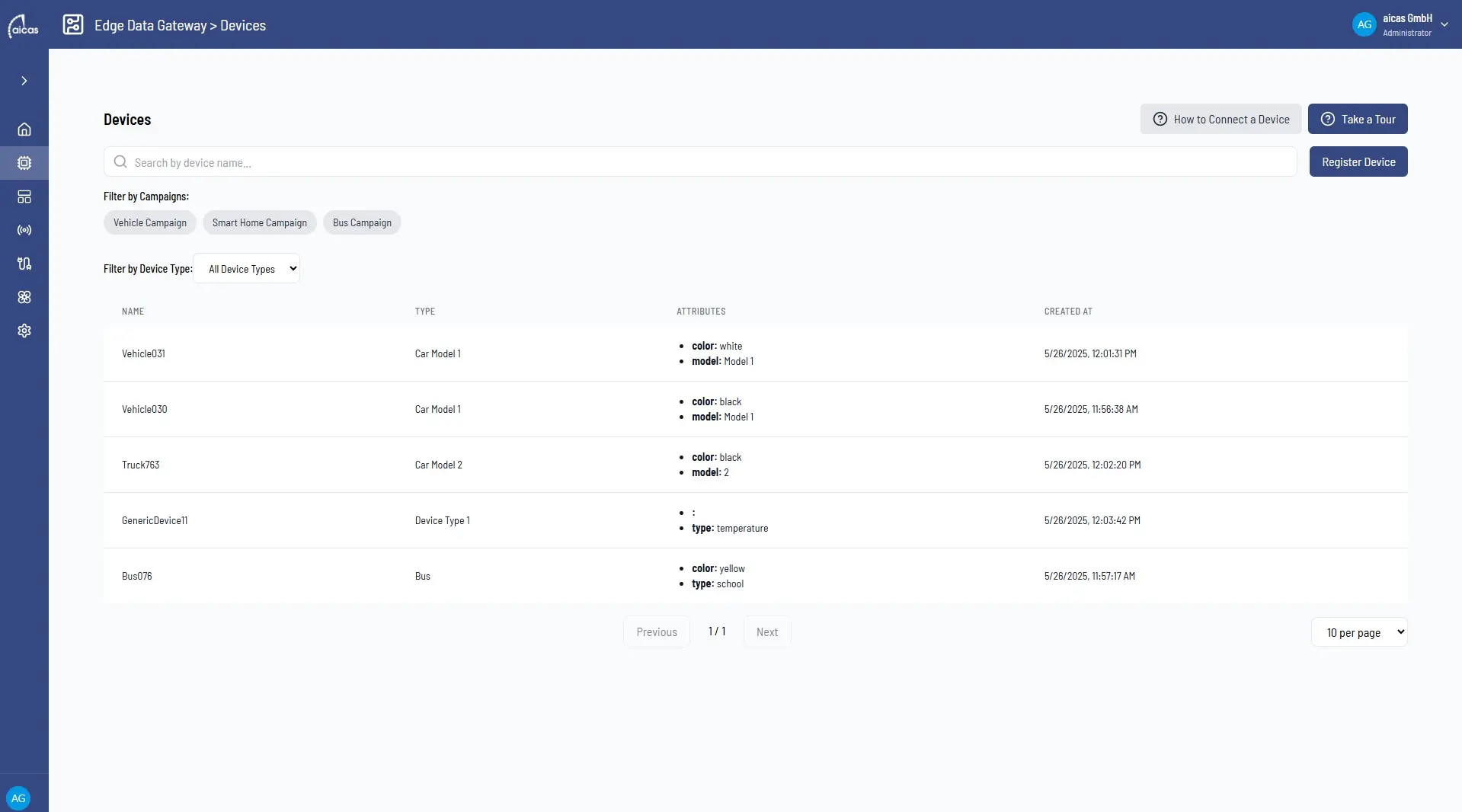
Add new devices to EDG through Automatic Agent Provisioning, providing preconfigured software agents that auto-connect devices to EDG.
Why EDG
Why EDG for operational edge data collection?
EDG combines device connectivity, data selection, reusable collection schemes, campaign management, and data delivery in one operational product. Instead of assembling these capabilities across multiple tools and custom integrations, teams can manage targeted edge data collection through one purpose-built workflow.
Campaigns, not Custom Pipelines
Define, reuse, and adapt data collection schemes across devices and fleets instead of building a new collection workflow for every data requirement.
Flexible Data Collection
Trigger data collection based on defined time intervals or events and adapt campaigns as data requirements change.
Fit into Existing Architectures
Use EDG as the data backbone within existing solutions and products instead of rebuilding edge data collection from scratch.
Built for Interoperability
Use supported data standards and interfaces across heterogeneous devices and connect collected data to existing analytics, visualization, and downstream systems.
Offline-Resilient
Monitor distributed devices and campaign activity remotely and support devices with intermittent connectivity, synchronizing again when connections are restored.
Use Case Examples
Apply selective edge data collection to operational data needs
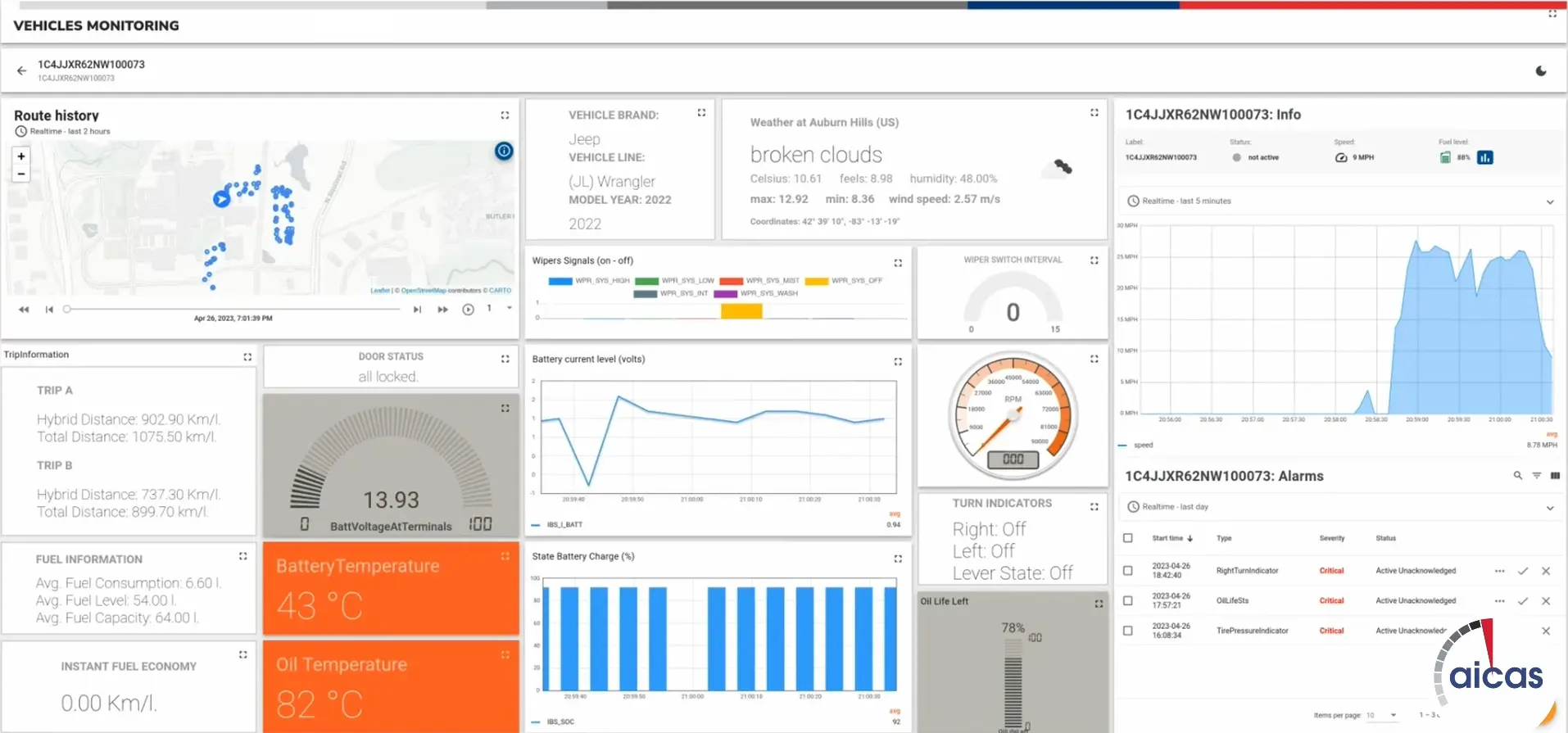
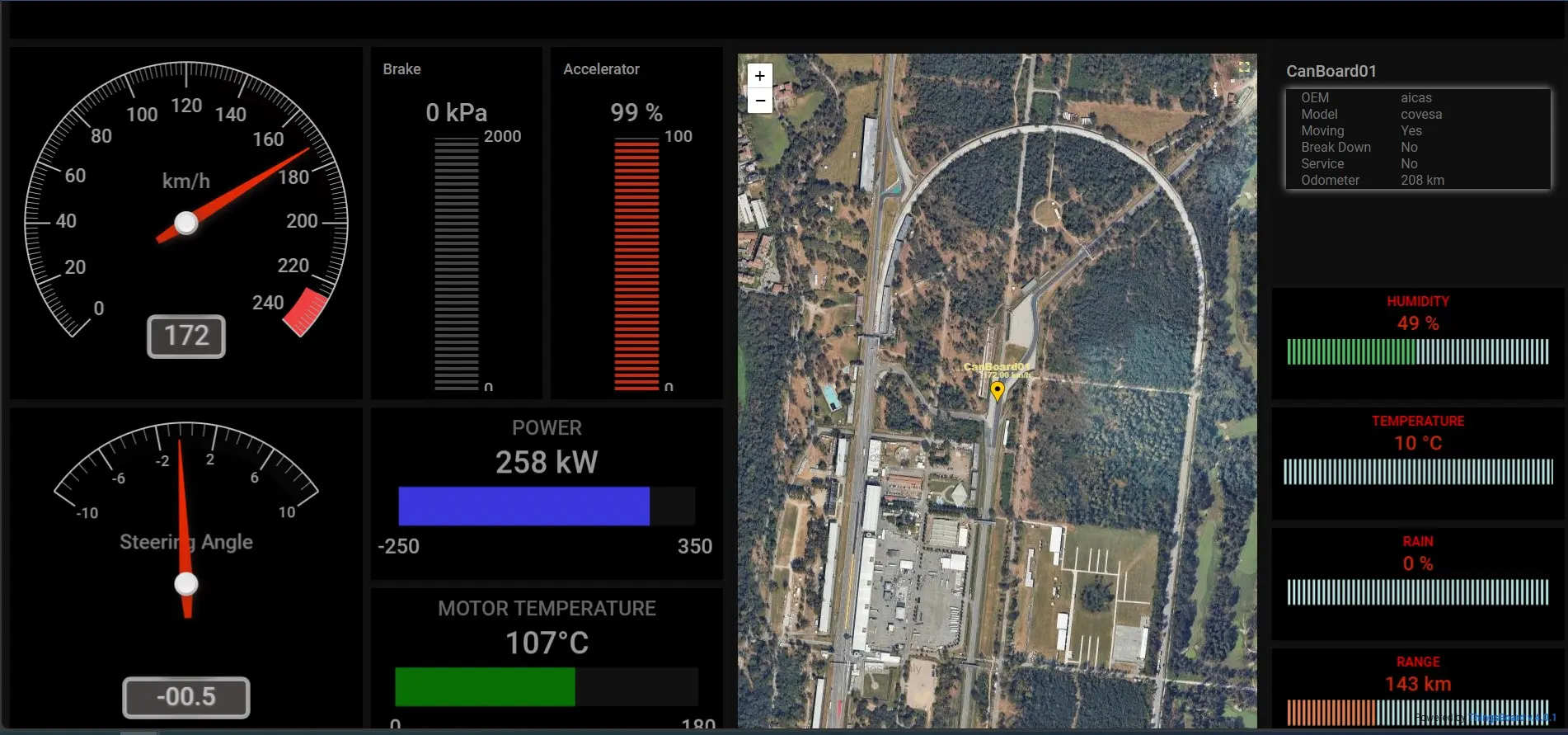
Vehicle Live Data Management
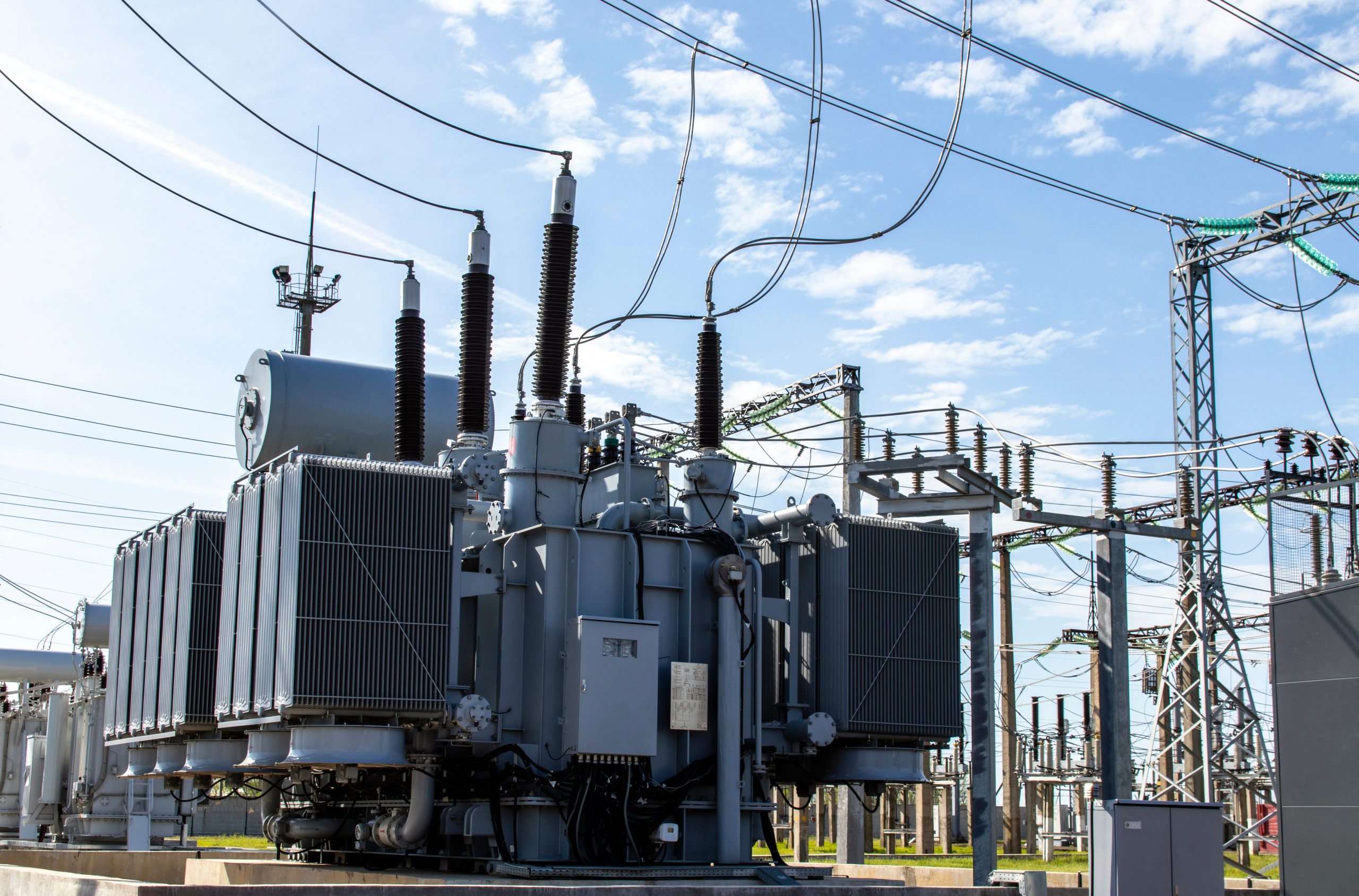
Critical Infrastructure – Power Transformers
Additional Examples
◼
Vehicle data for defined analytics requirements
◼
Data monitoring for software-defined vehicles
◼
Selective data collection for industrial and IoT environments
EDG for Edge AI
Turn Edge Data into Usable Input for AI
AI models depend on relevant, representative data from real-world systems. EDG helps teams select and collect the edge data needed for model training, validation, and continuous improvement instead of transferring every available device signal.
Select Relevant Training Data
Define which signals and operating conditions matter for a specific AI or ML use case.
Collect Data Across Distributed Devices
Run targeted campaigns across selected devices to build datasets from real-world edge environments.
Iterate with new Data
Adapt collection schemes and campaigns as models, operating conditions, and data requirements evolve.
Connect Data Operations to the AI Life Cycle
Within aicas EdgeSuite, EDG provides the data foundation that complements capabilities for deploying and managing AI-enabled applications at the edge.
aicas EdgeSuite
EDG within aicas EdgeSuite
Edge Data Gateway provides the data management capability within aicas EdgeSuite, complementing the platform’s capabilities for software and AI operations across distributed edge environments.
Within EdgeSuite, EDG works alongside other aicas products to connect data operations with the broader lifecycle for deploying, managing, and continuously improving software and AI-enabled applications at the edge.
EDG supports the data side of the AI lifecycle within aicas EdgeSuite. It provides relevant edge data for training, validation, and continuous improvement, while other EdgeSuite capabilities support the deployment and management of AI-enabled applications at the edge.
EDG can also be used as a standalone product within existing embedded and edge environments.
Explore aicas EdgeSuiteFAQ
Common questions about aicas Edge Data Gateway
Resources
Further Information
Next Step
Evaluate Edge Data Gateway for your Edge Data Workflow
Discuss your device environment, data collection requirements, and deployment model with an aicas expert.