Use Cases
Mobility & Automotive
Application Management
WHO
Various Automotive OEMs
WHAT
Helping car owners and the police to return your car after theft.
HOW
aicas enables the upload of software to vehicles. In case of theft, the application can – if properly authorized – provide vehicle data to the authorities. The vehicle’s location can be traced at any time, certain vehicle functions can be turned on and off. Even interaction with the driver is possible. If the vehicle stops, e.g., at a red light, the onward journey can be prevented.
VALUE
The solution enables a quick and easy upgrade to the desired software version for all processes and functions. Lifecycle management can be expanded to the functions of underlying, connected microprocessors. Completely remote and just with a few buttons, single devices, any selection of devices – even according to specific requirements, such as location, language, etc. – up to millions of devices can be managed – quick and simple.
Automotive AI Workflow Optimization
WHO
Automotive OEMs, Tier-1 suppliers, and mobility technology providers developing and operating AI-enabled vehicle functions in software-defined vehicles.
WHAT
AI models developed in laboratory or preproduction environments often behave differently under real-world operating conditions. Automotive teams face the challenge of deploying AI models securely across distributed vehicle fleets, monitoring inference behavior in realtime, collecting relevant operational data, and continuously improving model quality without increasing or exceeding available bandwidth putting a limit on unnecessary cloud usage costs.
HOW
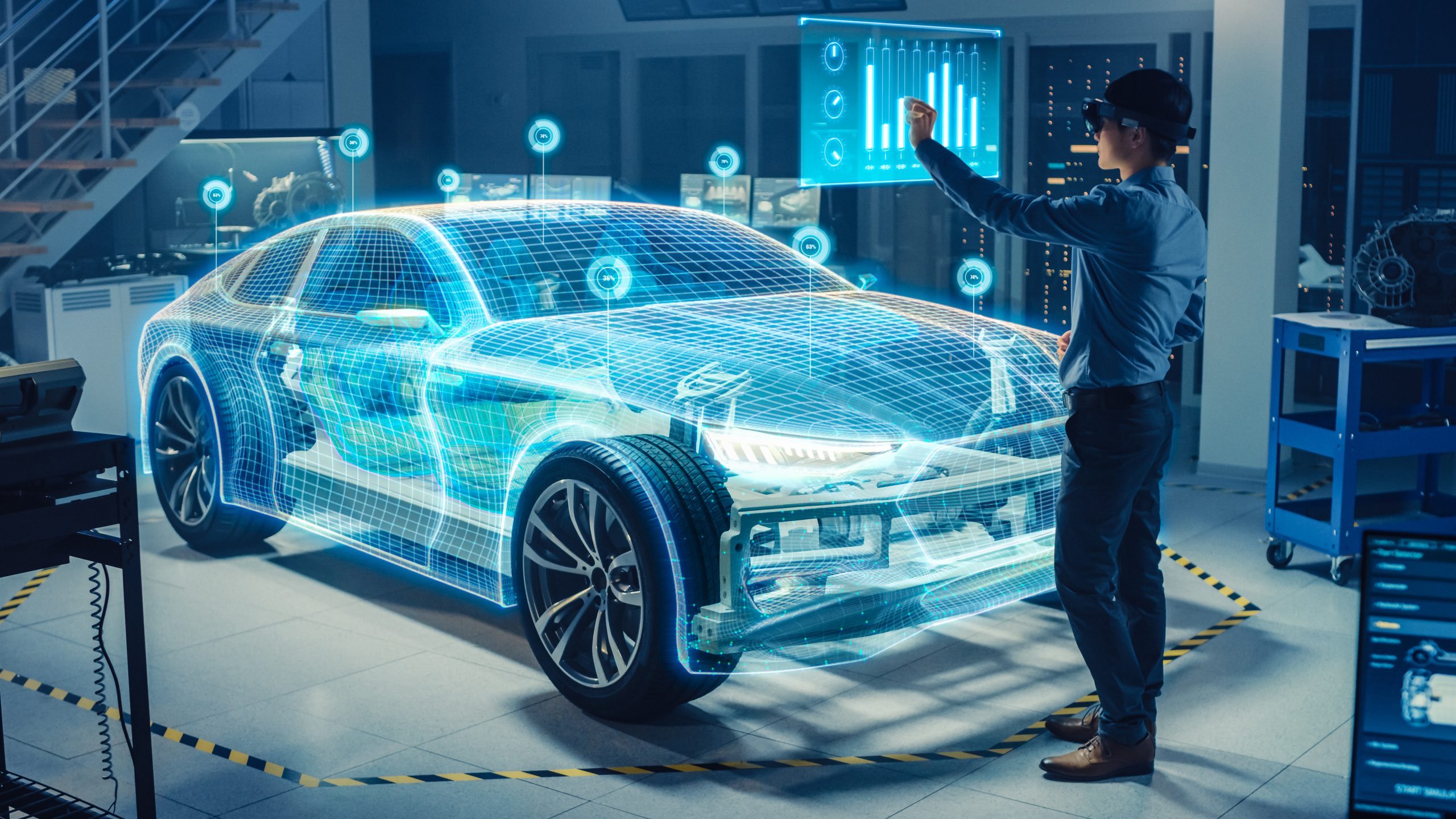
The combined solution of aicas EdgeSuite and the NXP eIQ® Auto SDK enables a continuous AI DevOps workflow for automotive edge intelligence. AI models can be developed using existing ML toolchains, deployed securely to vehicles via controlled Over-The-Air (OTA) workflows, monitored during operation, and continuously optimized based on real vehicle data.
The solution supports realtime inference monitoring, targeted edge data collection, selective telemetry transfer, and feedback loops that feed operational insights back into AI training pipelines. EdgeSuite integrates into existing AI and DevOps environments without replacing established workflows.
VALUE
The approach helps automotive teams accelerate AI deployment, shorten validation cycles, improve model quality, and reduce operational complexity. By enabling continuous monitoring and optimization in real vehicle environments, the solution supports more reliable, scalable, and cost-efficient AI operations for software-defined vehicles.
Data-driven Insights in DevOps
WHO
Automotive OEM
WHAT
Data monitoring within the virtual DevOp environment for software-defined vehicles.
HOW
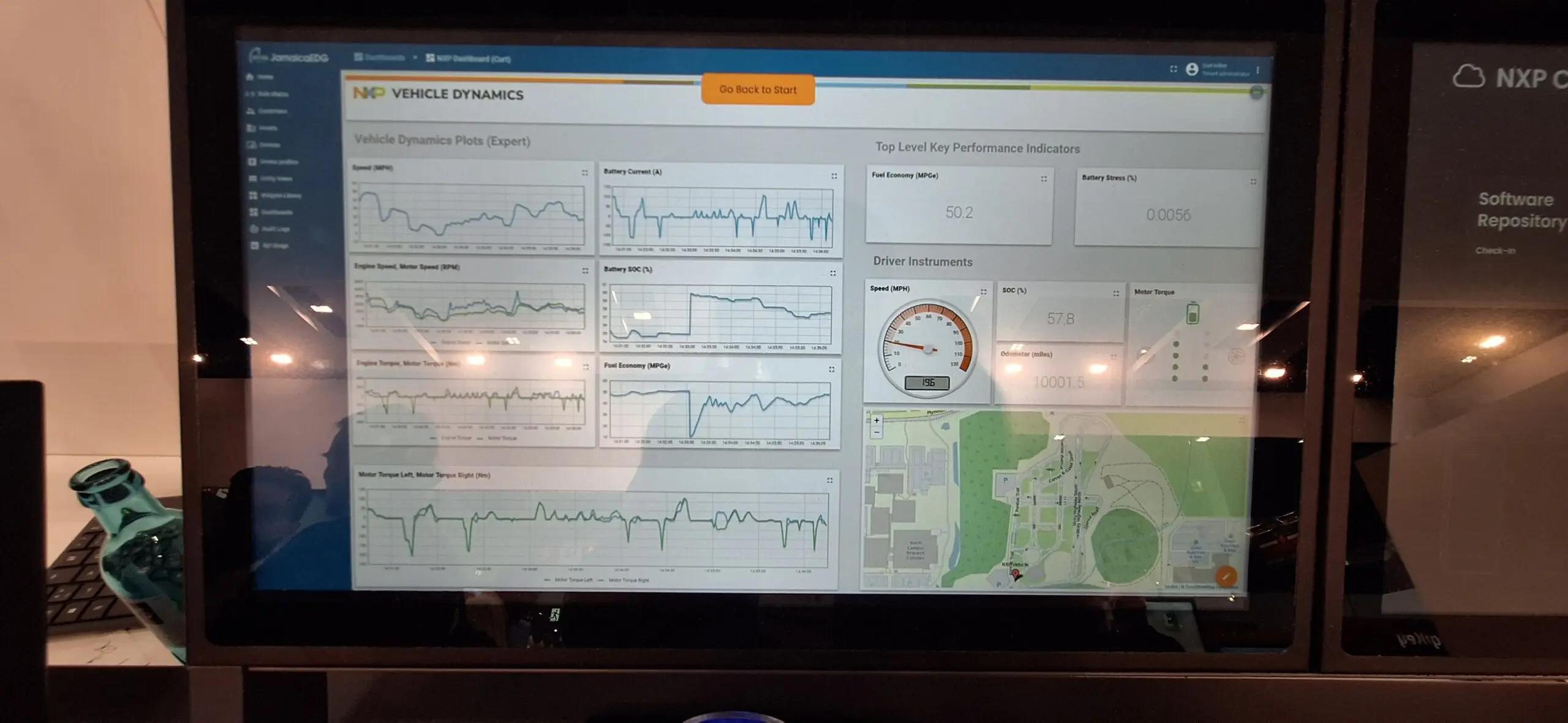
Easily select, pre-process, and visualize edge data streams in a dashboard in a cloud.
VALUE
Valuable insights enable informed decisions and rapid response, resulting in significant operational and cost savings, as well as improved vehicle safety and performance..

Enhanced Rail Track Inspection with Edge AI
WHO
Passenger rail operators
WHAT
Passenger rail operators responsible for high-speed and conventional rail networks require regular inspection of track geometry, rail profiles, and catenary systems. Early fault detection is essential to avoid operational restrictions and service disruptions.
HOW
Autonomous inspection vehicles equipped with advanced sensors and Edge AI technology can recognize and select image data locally in realtime. AI models can identify track and tie anomalies with precise geolocation. Only relevant, critical insights are transmitted wirelessly, enabling faster data-driven maintenance decisions.
VALUE
The solution architecture helps reduce downtime, prevent costly speed restrictions, and optimize maintenance scheduling, supporting measurable business improvements while ensuring safe and efficient rail operations.
Managing Telematics Data Usage for Connected Vehicles
WHO
Various Automotive OEMs
WHAT
Using telematics data generated from automotive sensors to improve driving safety and create innovative services.
HOW
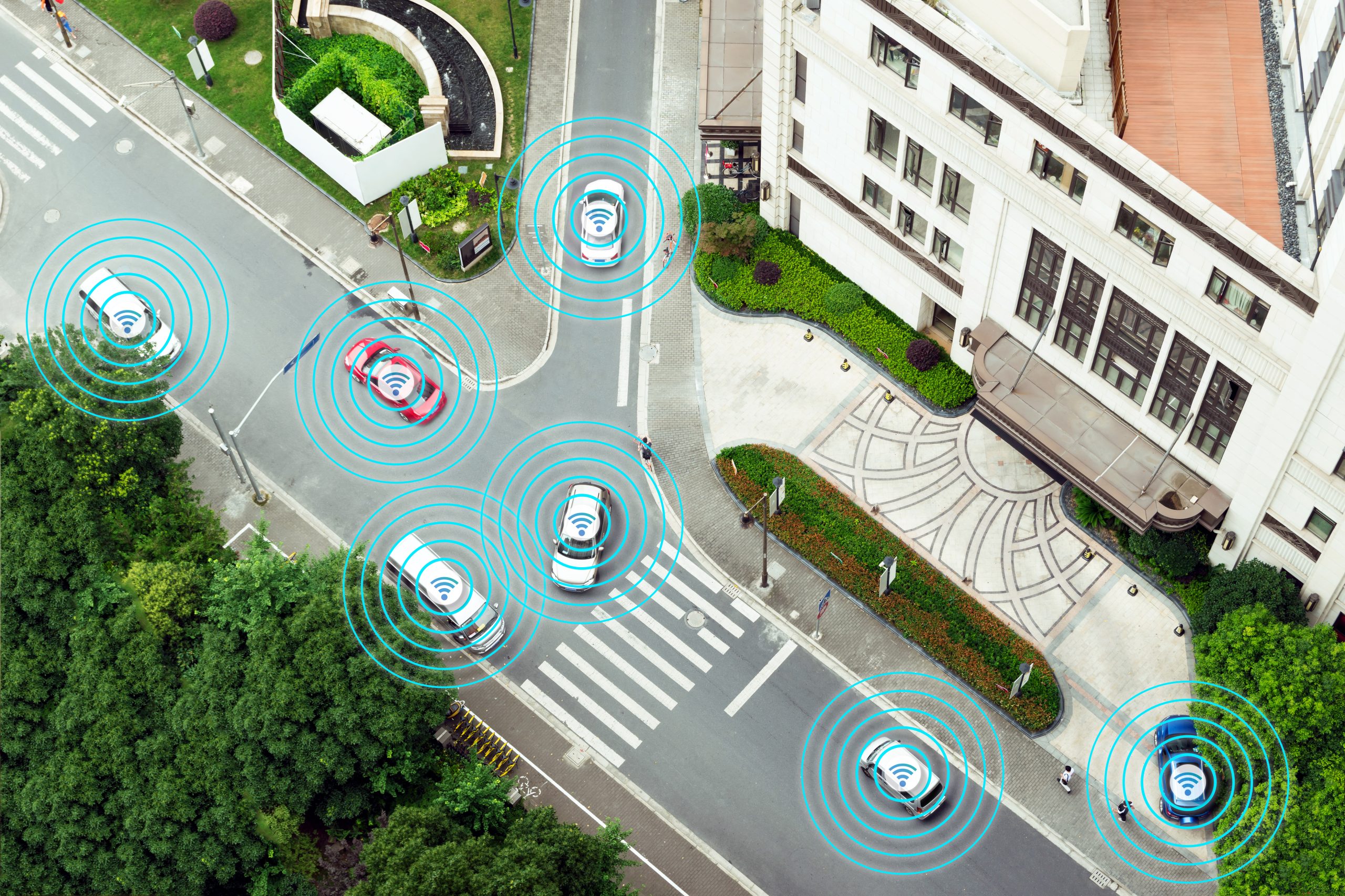
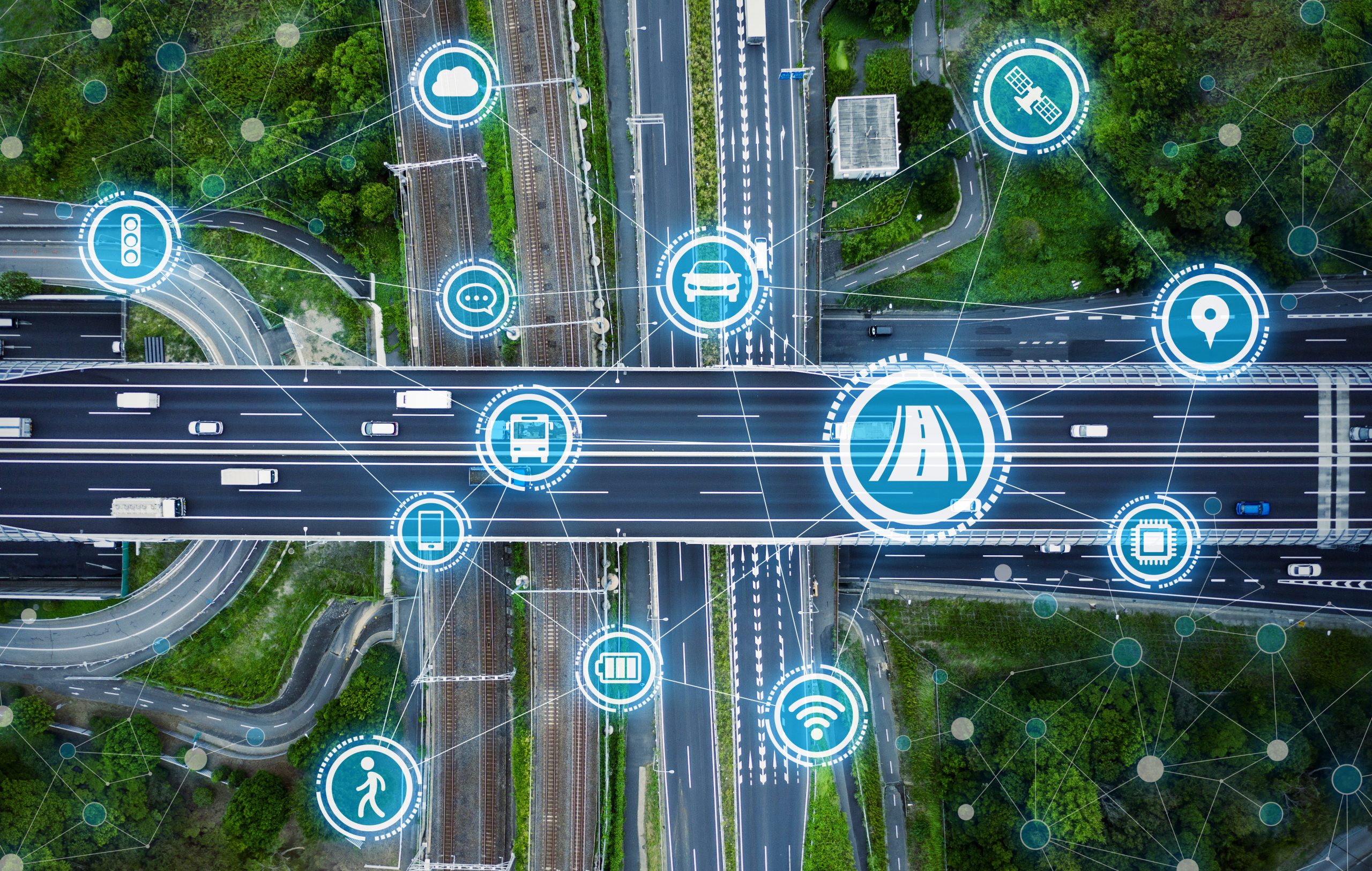
aicas’ telematics product provides features for the era of connected vehicles. It enables vehicles to connect to the road infrastructure and other vehicles by using onboard wireless communication technologies. The connected vehicles provide shared services and exchange vehicle information with each other to respond to the traffic situation.
VALUE
In the attached document, we provide details on many different telematics use case scenarios based on aicas’ telematics capabilities, TCU architecture, required functions of telematics systems, intra-vehicle network, V2X interface, diagnostic interface, bus implementation, data security, over-the-air (OTA) vehicle updates, logging and tracing, and reference applications.

Over-the-Air Updates for Fleet Software Management
WHO
IIC, AASA, aicas
WHAT
An Automotive Over-The-Air (AOTA) Updates Testbed that demonstrates how software can be remotely managed on a fleet of vehicles.
HOW
The base architecture is built around a Telematics Unit (TU) managing the connection to the external network. The TU has connections to the internal busses: ethernet and CAN. On the TU, a realtime OSGi framework with resource enforcement is used to manage the software lifecycle. By running an instance on each domain controller, customers can track the software on each instance. An additional level of segregation is achieved by running system and external software in a container, running as a separate process, in an FPGA, on a GPU, or on a microcontroller.
VALUE
Connecting a vehicle to the internet is just the beginning of digital transformation. This testbed demonstrates how connectivity can be used for effective data collection and remote software maintenance. Keeping the cloud-to-vehicle connection secure is essential for this transformation.

Smart Cities
WHO
Public Services
WHAT
When time is of the essence, technology should not be an issue. First response services, such as police and fire departments, shouldn’t be delayed by slow technology or services that are not available.
HOW
With aicas EdgeSuite running on AWS Wavelength, public services can rely on ultra-low latency services. This solution allows to run the needed services directly where they are needed, and not in some data center on the other side of the globe.
VALUE
Imagine a building is on fire. The first responder doesn’t know where the people are, but they need to go there NOW. With a people detection system that comes on when the emergency lights turn on, the people in a building can be located via triangulation. Saving lives, as it is easy to find out where people are. Informing the first responders on smart devices where they need to go to. Coordination with others – even without power in the buillding – becomes reality.
Vehicle Data for Insurance Risk Management
WHO
A provider of vehicle Data
WHAT
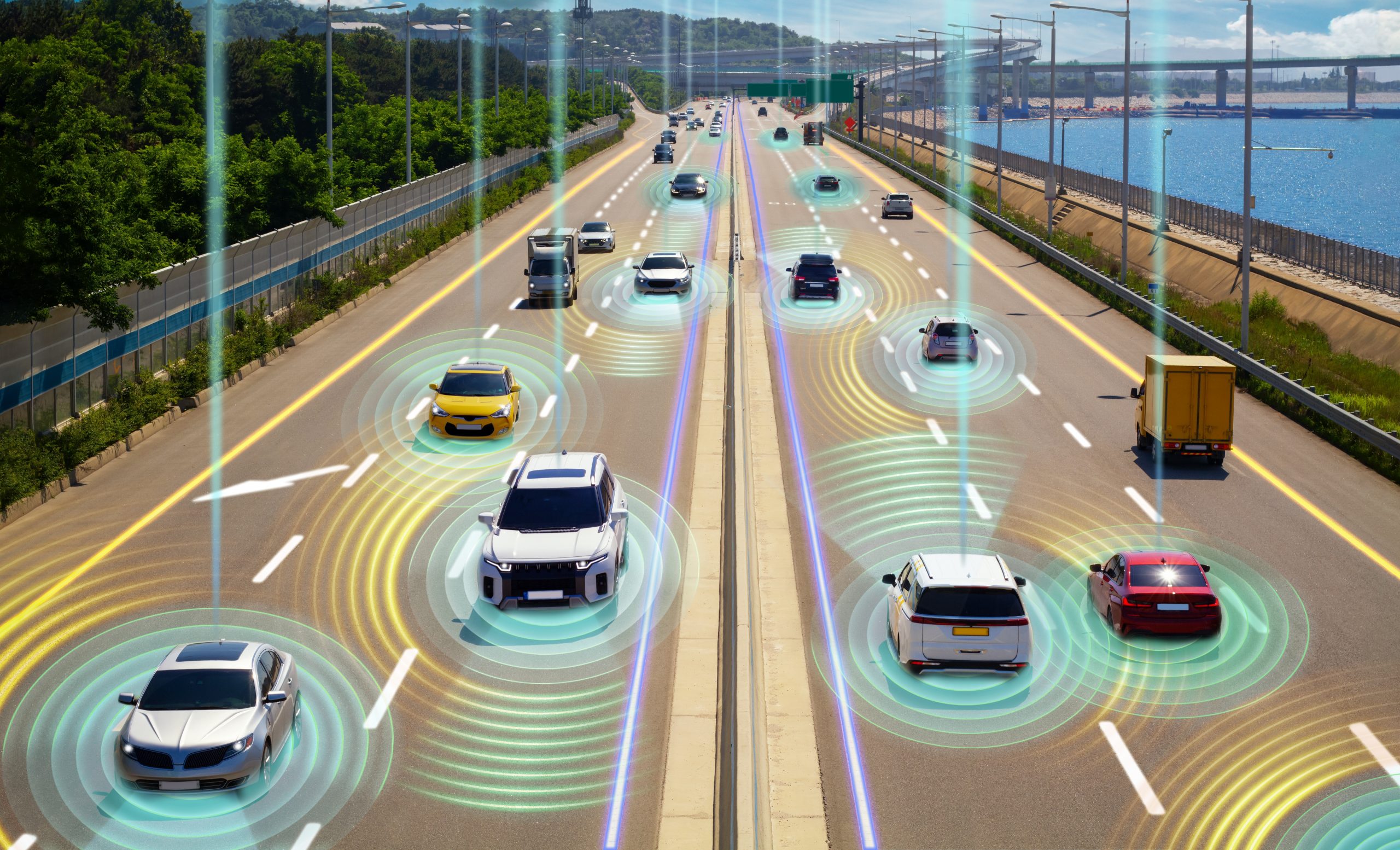
Streamlined process for providing vehicle data to external data consumers such as insurers.
HOW
Data consumers can easily request specific vehicle data parameters from OEMs or data brokers through a user-friendly interface.
VALUE
Simplified time-saving data monetization process, enhanced revenue generation, and strengthened partnerships between data providers and consumers such as insurance companies.
Vehicle Live Data Management
WHO
Leading Global Automotive Company
WHAT
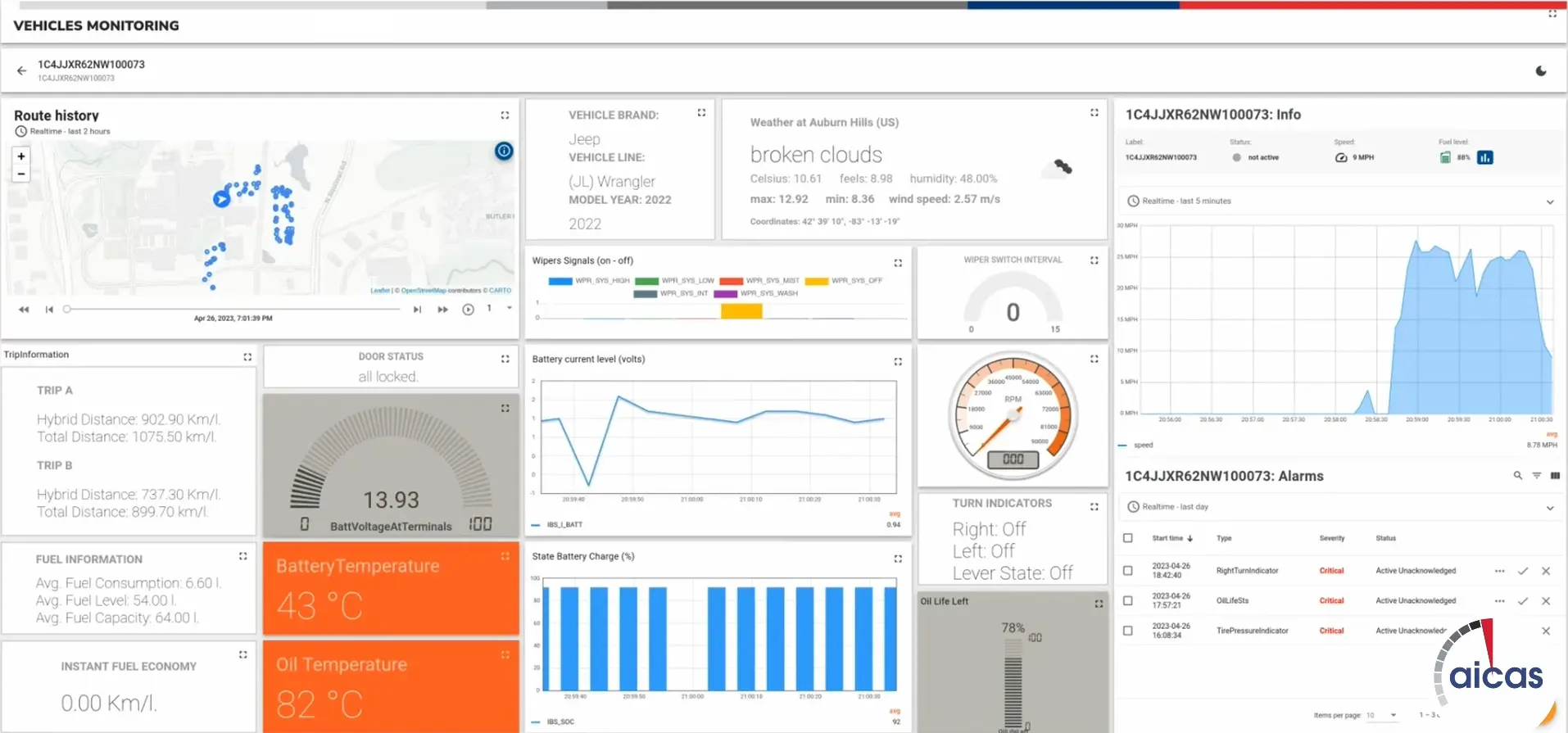
Integrate, select, and visualize live vehicle data in a dashboard to gain insights in realtime.
HOW
The aicas solution provides seamless access to realtime vehicle system data, such as vehicle diagnostics, sensor readings, and GPS locations. The dashboard analyzes, extracts, and visualizes insights from incoming live data streams. This enables live monitoring of speed, position, battery status, vehicle fault indications, fuel consumption, distance traveled, and much more. The solution provides over 100 configurable graphical widgets and can be used without programming skills.
VALUE
The insights provided by the dashboard enable operational and cost efficiencies as well as improved safety and performance. Decisions, responses, and actions can be taken immediately and cost effectively.